
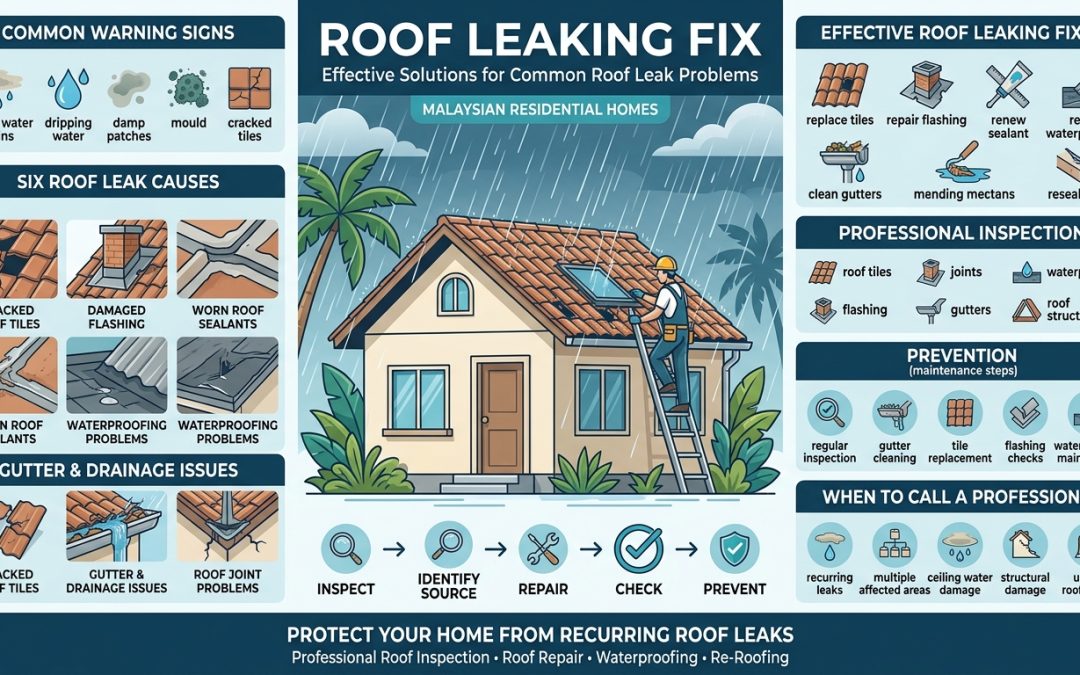
A leaking roof can quickly become a serious problem for homeowners, especially in Malaysia where heavy rainfall, strong winds, intense heat, and high humidity can put constant pressure on roofing systems. What may start as a small water stain or occasional drip can eventually lead to damaged ceilings, mould growth, weakened roofing materials, and further water damage.
Finding the right roof leaking fix depends on the source, location, and severity of the leak. Different roofing problems require different solutions, and simply sealing the visible leak may not always address the underlying cause.
Understanding common roof leak problems can help homeowners identify warning signs early and choose a more suitable repair solution.
When Does a Roof Need a Leaking Fix?
A roof may require professional attention when you notice visible signs of water entering your home or damage around the roofing system.
Common warning signs include:
- Water stains or discolouration on ceilings
- Water dripping during or after heavy rain
- Damp patches around walls or ceilings
- Mould or mildew growth
- Cracked or displaced roof tiles
- Damaged flashing around roof joints
- Deteriorated roof sealants
- Standing water on parts of the roof
Addressing these problems early can help prevent a small roof leak from developing into more extensive damage.
Roof Leaking Fix for Damaged Roof Tiles
Cracked, broken, or displaced roof tiles are common causes of roof leaks. When tiles are damaged, rainwater can penetrate through the affected area and reach the roofing underlayer.
A suitable roof leaking fix may include:
- Replacing cracked or broken tiles
- Repositioning displaced tiles
- Checking surrounding tiles for additional damage
- Inspecting the underlayment beneath the tiles
- Sealing vulnerable areas where appropriate
It is important to inspect more than just the visibly damaged tile because water can travel underneath roofing materials before entering the house.
Roof Leaking Fix for Damaged Flashing
Flashing is installed around areas such as roof joints, chimneys, valleys, walls, and other roof intersections. When flashing becomes loose, cracked, corroded, or poorly sealed, water can enter through these vulnerable points.
Roof leaking fixes for flashing problems may involve:
- Repairing loose flashing
- Replacing severely damaged flashing
- Resealing flashing joints
- Checking surrounding roofing materials
- Ensuring water is directed away from vulnerable areas
Proper flashing installation and sealing are important for preventing water from entering through roof joints and connections.
Roof Leaking Fix for Worn Roof Sealants
Roof sealants can deteriorate over time due to continuous exposure to sunlight, rain, humidity, and temperature changes.
When sealants become cracked or brittle, water may penetrate through small gaps around joints and connections.
A suitable roof leaking fix may involve:
- Removing deteriorated sealant
- Cleaning the affected surface
- Applying suitable replacement sealant
- Checking nearby joints for additional gaps
- Monitoring the area for recurring leaks
Replacing damaged sealant can help restore protection around vulnerable roof areas.
Roof Leaking Fix for Waterproofing Problems
Waterproofing plays an important role in protecting roofs from water penetration. When waterproofing systems deteriorate or are incorrectly applied, leaks may develop across affected areas.
Depending on the condition of the roof, solutions may include:
- Applying a suitable waterproofing coating
- Repairing damaged waterproofing layers
- Installing waterproofing membranes
- Sealing cracks and joints
- Improving protection around vulnerable roof sections
However, waterproofing should not simply be applied over every leak. The source of the water penetration should first be identified to determine the appropriate solution.
Roof Leaking Fix for Gutter and Drainage Problems
Roof leaks are not always caused directly by damaged roofing materials. Blocked or poorly functioning gutters and drainage systems can cause rainwater to accumulate and overflow into areas where it should not.
Common drainage-related problems include:
- Blocked gutters
- Leaves and debris buildup
- Damaged gutters
- Poor water flow
- Blocked downpipes
- Water overflowing near roof edges
Keeping gutters and drainage systems clear can help reduce the risk of water entering vulnerable parts of the roof.
Roof Leaking Fix for Roof Joint Problems
Roof joints and connection points can become vulnerable to water penetration over time. Movement, weather exposure, deteriorated sealants, and poor installation can create gaps around these areas.
Professional repairs may involve:
- Inspecting roof joints
- Resealing affected connections
- Repairing damaged materials
- Checking flashing around joints
- Improving waterproofing protection
Because roof joints can be difficult to inspect from the ground, professional assessment can help identify hidden problems.
Why Does My Roof Keep Leaking After Repair?
A roof may continue leaking even after a repair if the visible leak was not the actual source of the problem.
Water can travel through roofing materials before entering the ceiling, meaning the location of the indoor water stain may not be directly below the damaged area.
Recurring leaks may be caused by:
- An incorrectly identified leak source
- Multiple damaged areas
- Deteriorated waterproofing
- Damaged flashing
- Poor drainage
- Cracked roof tiles
- Gaps around roof joints
- Ageing roofing materials
If a leak continues after repair, a more detailed roof inspection may be necessary to identify the underlying cause.
Should You Use DIY Solutions for a Roof Leak?
Some homeowners may consider using sealants or waterproofing products to fix a roof leak themselves.
While temporary solutions may sometimes reduce minor water penetration, DIY repairs can be risky when the actual source of the leak has not been identified.
Professional assistance may be more appropriate when:
- The leak keeps returning
- Multiple areas are affected
- The roof is difficult or unsafe to access
- There is visible structural damage
- Water is entering the ceiling
- Waterproofing has significantly deteriorated
- The roof has extensive damage
A professional roofing specialist can assess the condition of the roof and recommend a suitable repair approach.
Why Professional Roof Inspection Matters
Identifying the source of a roof leak can be difficult without proper inspection.
Professional roofing specialists can examine:
- Roof tiles and roofing sheets
- Flashing and roof joints
- Waterproofing systems
- Roof structure
- Gutters and drainage
- Areas showing signs of water damage
- Mould and moisture
- Previous repair areas
A detailed inspection can help determine whether the problem requires a simple repair, waterproofing work, more extensive restoration, or another roofing solution.
How to Prevent Future Roof Leaks
Fixing a roof leak is only part of protecting your home. Regular maintenance can help identify potential problems before they become serious.
Homeowners should consider:
- Inspecting the roof regularly
- Replacing damaged or missing tiles
- Checking flashing and roof joints
- Cleaning gutters and downpipes
- Monitoring waterproofing conditions
- Removing leaves and debris
- Checking for mould and moisture
- Addressing minor damage early
Preventive maintenance can reduce the risk of recurring leaks and help keep the roofing system in better condition.
Choose the Right Roof Leaking Fix
There is no single solution that works for every roof leak. The appropriate roof leaking fix depends on what is causing the water penetration and how extensive the damage has become.
For example, a cracked tile may require replacement, while deteriorated flashing may need resealing or replacement. Waterproofing problems may require a different treatment, while drainage issues may need gutter or downpipe maintenance.
Understanding the actual cause of the leak is therefore important before deciding on a repair method.
Choosing a Qualified Roofing Specialist
When dealing with a leaking roof, choosing an experienced roofing specialist can make a significant difference.
Look for providers who offer:
- Professional roof inspections
- Roof leak detection
- Experienced roofing specialists
- Roof repair services
- Waterproofing solutions
- Proper installation practices
- Quality roofing materials
- Clear repair recommendations
- Professional safety practices
- Workmanship warranties where applicable
A reliable roofing contractor should identify the source of the problem and recommend a solution based on the actual condition of your roof.
Conclusion
Addressing a leaking roof is an important part of maintaining the safety and condition of your home, especially in Malaysia where heavy rainfall, strong winds, heat, and humidity can place continuous stress on roofing systems. While minor and localised problems such as cracked tiles, worn sealants, or small gaps around roof joints may be resolved through professional repair, more extensive damage, deteriorated waterproofing, damaged flashing, poor drainage, or recurring leaks may require a more detailed inspection and comprehensive roofing solution. Understanding the actual source of the leak allows homeowners to choose a repair method that addresses the underlying problem rather than simply covering the visible signs of water damage.
Beyond the immediate leak, homeowners should also consider the overall condition of the roofing system, age of the roof, previous repair history, condition of the tiles and flashing, effectiveness of waterproofing, and condition of gutters and drainage systems. A leak that continues to appear after previous repairs may indicate that the original source was not correctly identified or that multiple areas of the roof are affected. Applying sealant or waterproofing without understanding the cause may only provide a temporary solution, while replacing materials that are still in good condition may result in unnecessary costs. A professional roof inspection can provide a clearer understanding of the problem and help determine whether targeted repairs, waterproofing work, maintenance, or more extensive roofing work is appropriate for the property.
Partnering with an experienced roofing specialist can help ensure that roof leaks are properly identified and addressed before they develop into more serious problems. Taking a proactive approach to roof maintenance and arranging a professional inspection when warning signs appear can help protect your home from recurring leaks, ceiling and wall damage, mould growth, structural deterioration, and unexpected repair costs. Whether your roof requires a simple tile replacement, flashing repair, sealant renewal, waterproofing treatment, drainage maintenance, or more extensive restoration, making an informed decision based on the actual condition of the roofing system can help maintain the safety, protection, and long-term value of your home.
FAQs
1. What is the best roof leaking fix?
The best roof leaking fix depends on the actual source of the leak. Damaged tiles may require replacement, while leaking flashing may need resealing or replacement. Waterproofing, drainage, and roof joint problems may require different repair methods.
2. Why does my roof keep leaking after repair?
A roof may continue leaking when the original repair did not address the actual source of water penetration. Water can travel underneath roofing materials, making the visible ceiling stain different from the actual location of the roof problem.
3. Can I fix a leaking roof myself?
Minor issues may sometimes be temporarily addressed with suitable roofing products, but DIY repairs can be risky when the source of the leak is unclear or the roof is difficult to access. Professional inspection is recommended for recurring, extensive, or difficult-to-locate leaks.
4. How can I prevent roof leaks?
Regular roof inspections and maintenance can help prevent leaks. Homeowners should check roof tiles, flashing, sealants, waterproofing, gutters, downpipes, and roof joints while addressing minor damage before it becomes more serious.
5. When should I call a professional roofing specialist?
You should consider contacting a professional when the leak keeps returning, multiple areas are affected, water is entering the ceiling, there is visible structural damage, or the source of the leak cannot be identified.