
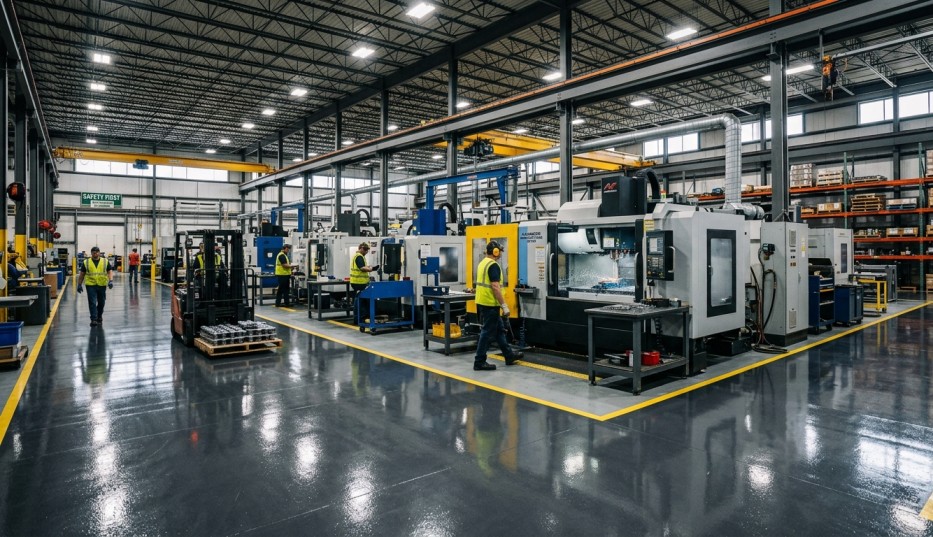
Industrial floors are one of the most heavily used surfaces in factories, warehouses, workshops, and manufacturing facilities. Unlike residential flooring, industrial floors are constantly exposed to heavy machinery, chemical spills, foot traffic, and continuous operational stress.
Because of these demanding conditions, standard flooring materials often wear out quickly if they are not properly protected. This is where industrial flooring coating systems play an important role in maintaining long-term durability and safety.
A strong protective coating helps extend floor lifespan, improve safety conditions, and reduce long-term maintenance costs. For many industrial operators, flooring performance directly affects daily operations and overall efficiency.
What Is Industrial Flooring Coating?
Industrial flooring coating refers to protective surface layers applied on concrete floors to improve durability and resistance.
These coatings are designed to protect against:
- heavy loads and machinery
- chemical spills
- oil and grease exposure
- abrasion and wear
- moisture damage
Depending on the facility type, different coating systems may be used, such as epoxy coatings, polyurethane coatings, or specialized industrial sealants.
Each system is selected based on operational requirements and environmental conditions.
Why Industrial Floors Face Constant Damage
Industrial environments place continuous stress on flooring surfaces. Over time, even strong concrete floors can degrade due to repeated pressure and exposure.
Common causes of damage include:
- forklift traffic
- heavy equipment movement
- chemical exposure
- temperature changes
- moisture penetration
- constant abrasion
Without proper protection, floors may develop cracks, surface erosion, or structural weakening.
This can eventually affect safety, efficiency, and maintenance costs.
How Protective Coating Improves Durability
One of the main advantages of industrial flooring coating systems is improved durability.
A coated floor becomes more resistant to:
- surface wear
- cracking
- chemical corrosion
- impact damage
Instead of the concrete absorbing damage directly, the protective layer takes the impact. This helps extend the overall lifespan of the flooring system.
For industrial operators, this means fewer repairs and less operational disruption over time.
Improved Safety in Industrial Environments
Safety is a major concern in industrial facilities. Damaged or uncoated floors can become hazardous for workers.
Common risks include:
- slippery surfaces from spills
- uneven flooring causing accidents
- dust formation from deteriorating concrete
- poor traction for machinery
Industrial flooring coatings help improve surface grip and reduce safety risks. Some coatings can also be customized with anti-slip properties to further enhance workplace safety.
A safer environment leads to better productivity and fewer workplace incidents.
Resistance to Chemical and Oil Spills
Many industrial operations involve the use of chemicals, oils, and lubricants. When these substances come into contact with unprotected concrete, they can cause long-term damage.
Industrial flooring coatings provide a protective barrier that helps prevent:
- chemical absorption
- staining
- surface erosion
- structural weakening
This is especially important in factories, automotive workshops, and manufacturing plants where chemical exposure is frequent.
Proper coating helps maintain both structural integrity and cleanliness of the workspace.
Easier Cleaning and Maintenance
Uncoated industrial floors tend to absorb dirt, dust, and liquids, making them harder to clean over time.
With a protective coating system, the surface becomes smoother and more resistant to absorption. This allows for:
- faster cleaning processes
- reduced maintenance effort
- better hygiene control
- improved operational efficiency
In large facilities, even small improvements in cleaning efficiency can significantly reduce operational workload.
Long-Term Cost Savings for Businesses
Although industrial flooring coating requires initial investment, it often leads to long-term savings.
Businesses benefit from:
- fewer repair costs
- reduced downtime
- lower maintenance frequency
- extended floor lifespan
Unprotected floors may require frequent patching, resurfacing, or even full replacement over time. A coating system helps reduce these recurring expenses.
For industrial operators, this makes flooring protection a cost-effective long-term strategy.
Better Appearance for Industrial Facilities
While functionality is the main priority, appearance also plays a role in industrial environments.
A coated floor creates a cleaner and more professional look, which can be beneficial for:
- client visits
- safety inspections
- operational branding
- employee working conditions
Modern coating systems are available in different colors and finishes, allowing businesses to improve both function and visual presentation.
Why Professional Application Matters
Industrial flooring coating must be applied correctly to ensure long-term performance.
Poor application can lead to:
- peeling or bubbling
- uneven surfaces
- weak adhesion
- reduced durability
Professional application ensures proper surface preparation, correct material selection, and precise coating techniques.
This helps maximize the effectiveness and lifespan of the coating system.
Industrial Flooring as a Long-Term Investment
Many businesses now view flooring as a long-term infrastructure investment rather than a simple construction element.
A properly coated floor supports:
- operational efficiency
- workplace safety
- cost control
- structural protection
This makes industrial flooring coating an important part of facility planning and maintenance strategy.
Conclusion
Industrial flooring coating systems play a critical role in protecting high-traffic industrial environments from damage, wear, and chemical exposure. Without proper protection, industrial floors can deteriorate quickly, leading to safety risks and higher maintenance costs.
By applying strong protective coatings, businesses can improve durability, safety, and operational efficiency while reducing long-term expenses.
As industrial operations continue to grow and demand higher performance standards, flooring protection has become an essential part of facility management and infrastructure planning.
More Info
- https://99roofingnplumbing.com/article/
- https://99roofingnplumbing.com/
- Industrial flooring systems overview
https://www.epoxy.com/what-is-epoxy-flooring/
FAQs
1. What is industrial flooring coating?
It is a protective layer applied on concrete floors to improve durability and resistance.
2. Why do industrial floors need coating?
To protect against heavy loads, chemicals, and wear from daily operations.
3. Is epoxy part of industrial flooring coating?
Yes, epoxy is one of the most common coating systems used.
4. How long does industrial floor coating last?
It depends on usage, but it can last several years with proper maintenance.
5. Is professional installation necessary?
Yes, proper application ensures durability and long-term performance.